

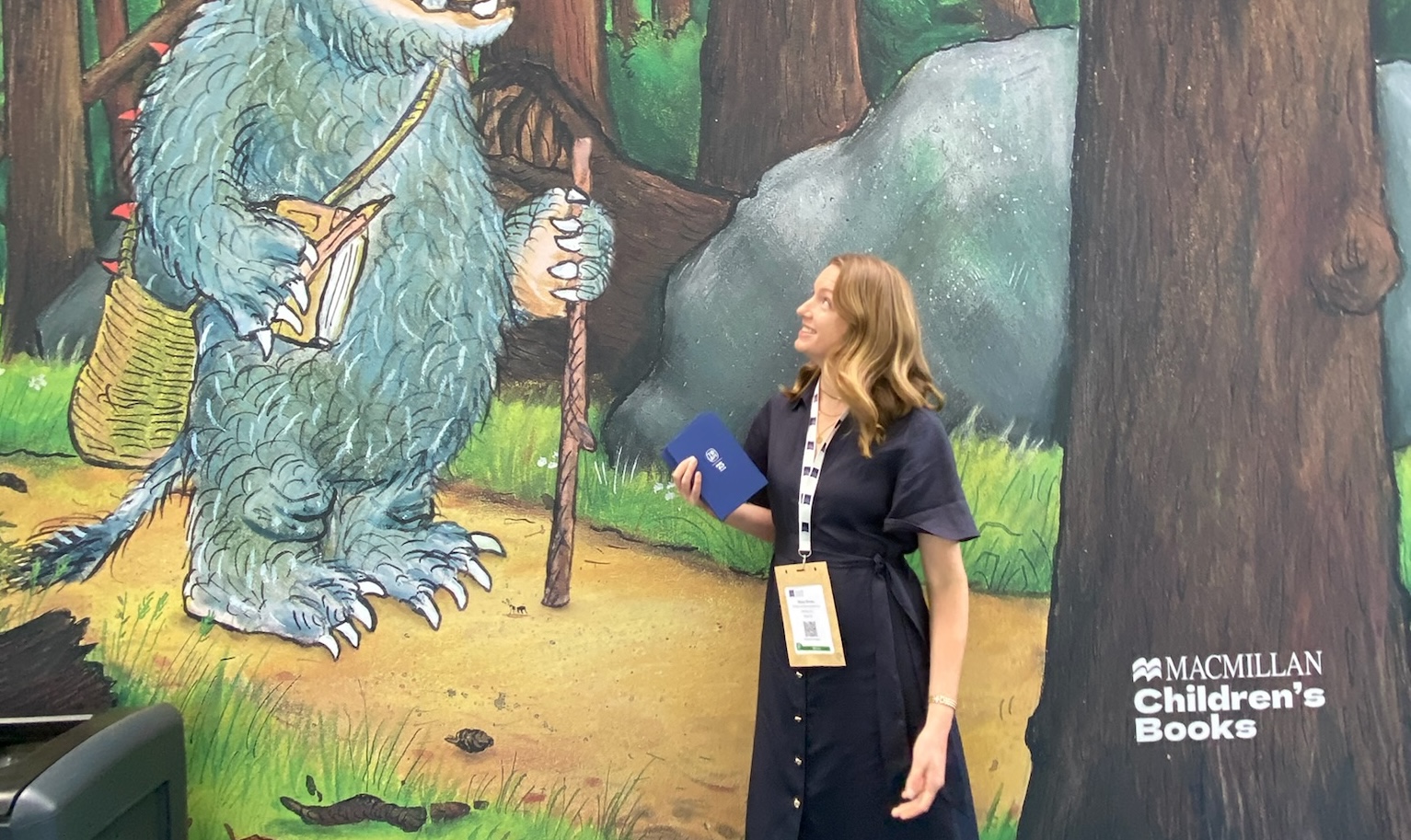
Last week, I attended my first-ever book fair. I’ve been to smaller publishing and writing conferences, but I’d never been to one as massive as the London Book Fair, hereto referred to as LBF.
And it was massive. Thousands of people, all gathered in the pursuit of one thing: books. There were people from all corners of the publishing industry: readers, writers, agents, publishers, marketers, author organizations… the list goes on.
And as someone who has spent her entire life devoted to reading, writing, and growing authors, I have to say: it was beautiful.
Now I’m back in Portugal and still buzzing from the energy of the event and the connections I made there. So I thought I’d continue the experience by sharing my top takeaways with you, some of which you might expect and others that may surprise you.
Takeaway #1: The London Book Fair values inclusion
Even before I arrived in London, I knew LBF had inclusion baked into its programming. Since I had a media pass—thanks to readers like you who make my platform possible!—I had an inside look at the planning and highlights of the fair.
During the pre-event press briefing, Emma Lowe, the director of the fair, mentioned how important inclusion was to her, especially for people with disabilities, including intellectual disabilities, which are often left out of the inclusion conversation. When I arrived to the fair, I saw how inclusion was baked into the fair planning, including numerous panels on DEI, a sensory room, and a booth devoted to inclusive children’s books run by Beth Cox.
There’s always room to grow when it comes to inclusion, and I look forward to seeing LBF’s efforts in 2027.
Takeaway #2: Publishing, authors, and books are still thriving
Let me be clear: publishing isn’t what it used to be. Six- and seven-figure deals are not the norm, and it’s harder than ever to get books into readers’ hands. The marketing onus is on the author, even when that author has a traditional publishing contract. And AI slop is making it tougher for books to be found.
And yet…
Books continue to thrive. Readers continue to read. Authors are out there making livings off their books, and leveraging their books for business and brand growth. To get there, you have to take authorhood seriously and treat it like a business. But the opportunity is still ripe for new and established authors.
Takeaway #3: There are ample 5-star organizations and professionals to support authors
Communities like the Author Influence Circle and organizations like The Alliance of Independent Authors (ALLi) are available to authors who want to find both community and professional support. I had a great conversation with Philip Lynch, the co-director of ALLi, and loved hearing about the great things they’re doing for authors—and the passion the team has for supporting author careers.
I also met numerous publishing professionals who are committed to their work supporting authors—genuine, skilled, excellence-focused folks who deeply care about the work they do and the authors they support.
And it makes sense: publishing people love books, and that’s why we got into this field. We love our work! It was incredible to be around so many passionate book lovers.
Takeaway #4: Publishers are not loving generative AI
Time and again, from agents and publishers alike, I heard a variation of: If even one line of your book uses generative AI, we won’t accept it. The main reason: it’s plagiarism, and it’s not copyrightable. It’s too risky for them to publish anything with AI generation.
In between sessions, I chatted with publishing pros and authors about their ethical approach to AI. What constitutes generation?
If you “spar” with AI in your early ideation, is that generation?
If AI generates a phrase that becomes a bedrock to your nonfiction book and business framework, but the core idea is yours, is that generation?
If AI rewrites a chapter title, or “smoothes out” prose, is that generation?
The answer, right now, has been a resounding yes. You’re better off not using AI right now, at all, in any generative capacity.
You can use it to gather sources, research, comparative titles (though write your own analysis!), and other elements that you would have relied on Google for. But I would recommend including in your prompt something like: “Do not write anything for me. Just give me the information.”
That isn’t to say publishers aren’t using AI in their business models, or that authors were being discouraged from tapping into AI for marketing, operations, legal, and other aspects of business. There were dozens of sessions on AI, and even more vendors there with AI-first companies.
But when it comes to the creative aspect of the author journey—including ideation, outlining, writing, editing, and cover art—the resounding theme was: run screaming in the other direction.
Takeaway #5: Human rights matter to the book world
The world doesn’t stop for LBF, and many of the sessions and conversations centered around books’ role in the rise of authoritarianism, human rights, and an inclusive world. My favorite part of the fair was an entire day of programming from The English Pen, an organization that works at the intersection of writing and human rights.
During one panel on the role of books within the rise of authoritarianism, Mary Glenn, the Chief of UN Publications, said something that stuck with me: “Storytelling is a human right.”
She’s right—storytelling has been around for around 30,000 years, and even though political leaders and generative AI are threatening how we create and experience stories, the art of storytelling is alive and well. And fairs like LBF are helping us keep books, and storytelling, alive.
Did you attend LBF, and if so, what were your takeaways? If not, what are your thoughts on generative AI, storytelling, or the role of books in furthering human rights?
Please share in the comments. I read and reply to each and every comment and love learning from you.
P.S. This is a genuinely human article. No AI was used to write this piece.



Comments +